





With the speed of advances in artificial intelligence (AI) and its increasing use in workplaces, how can we make sure that the quality of work and the health and safety of workers are prioritized?
A new, seven-year partnership research project led by the Institute for Work & Health (IWH) has hit the ground running in efforts to answer this question.
The project, titled Partnership on AI and Quality of work (PAIQ), aims to investigate how AI could affect the quality of work in Canada—and the impacts for workers. In early December, IWH held a launch event for the project’s researchers and partners.
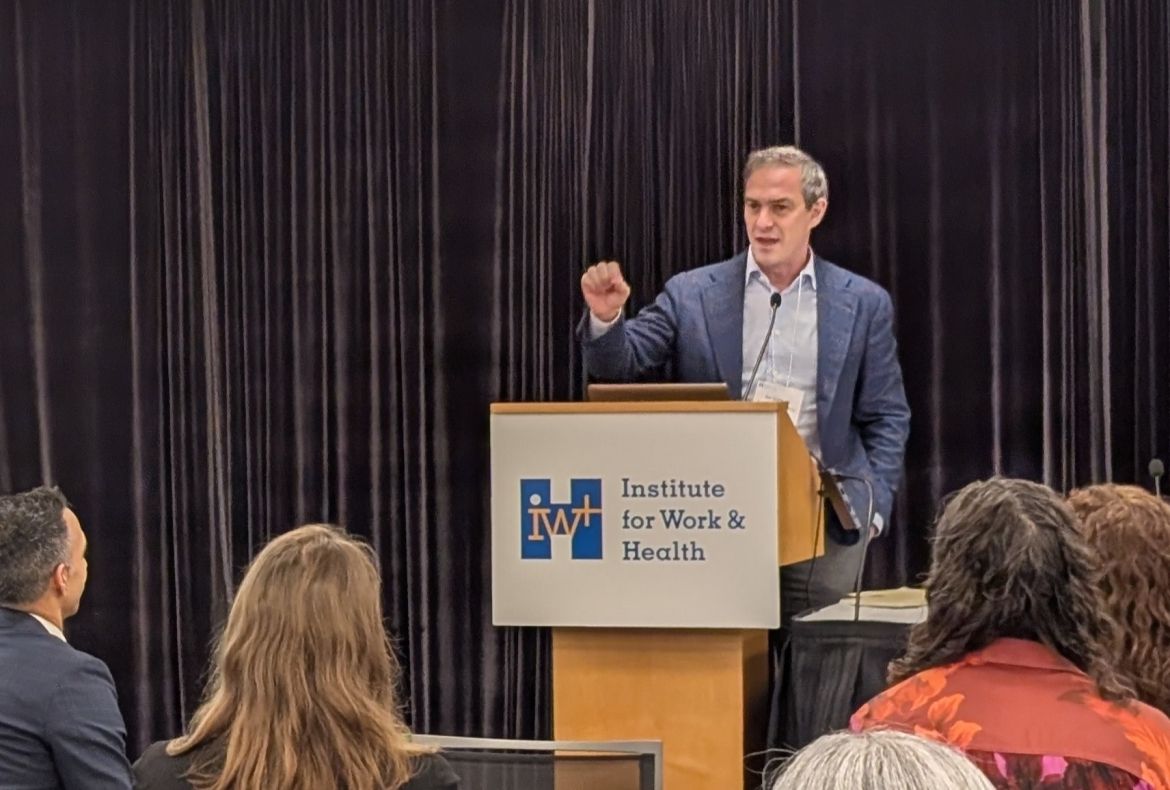
“So far, we’ve seen incredible advances in AI from being good old-fashioned prediction machines to writing and drawing and coding,” said Dr. Avi Goldfarb, Rotman chair in artificial intelligence and healthcare and professor of marketing at the University of Toronto’s Rotman School of Management, in his presentation at the launch event.
“That pace of change is not slowing down,” said Goldfarb. “And so the question is, how can we ensure that we get the benefits of this technology, mitigate the harms, and in the process, create a more equal and better world of work?”
December’s launch event served as a first planning meeting to develop a roadmap for the project and to identify the questions the project will try to answer. The evidence produced will have significant implications for our understanding of the impact of AI on the nature of work.
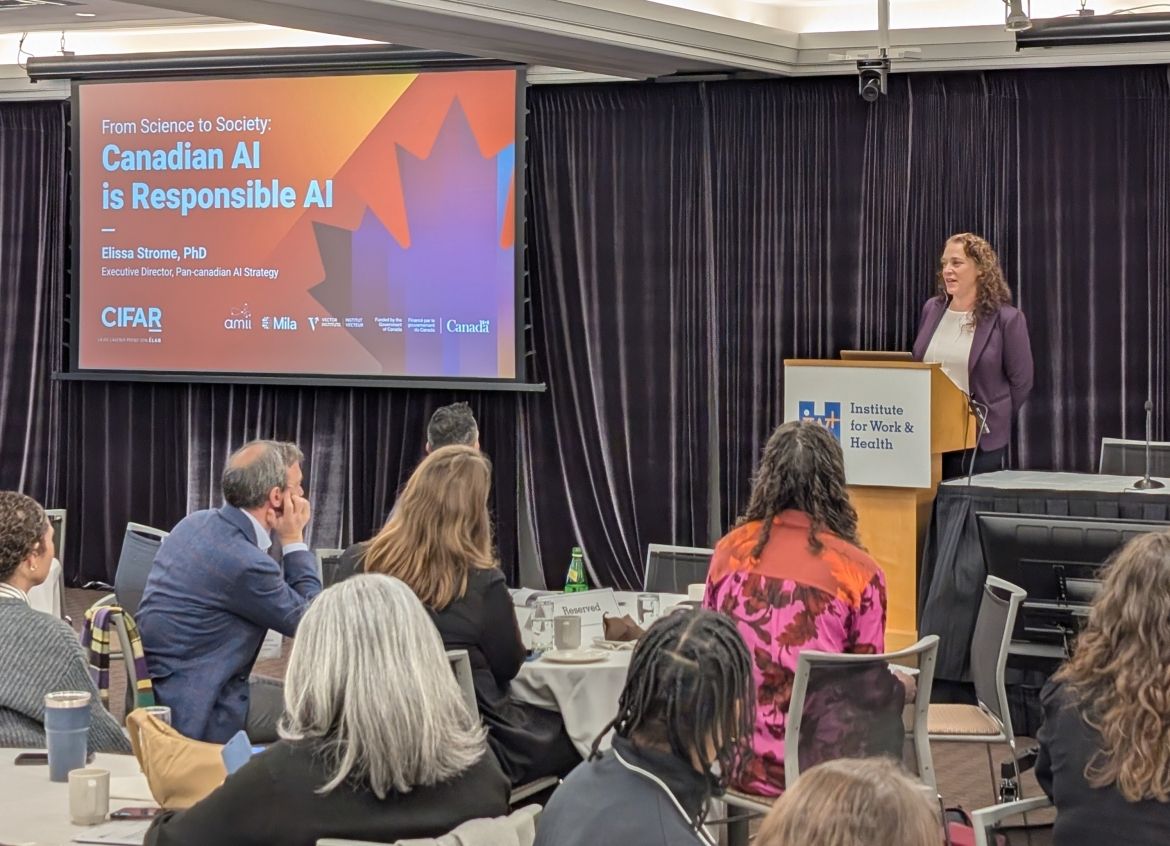
“As many as 78 per cent of Canadians say they’re worried about AI as a threat to jobs,” said Dr. Elissa Strome, executive director of the Pan-Canadian AI Strategy at the Canadian Institute for Advanced Research (CIFAR), citing a 2025 survey by Leger in her keynote address.
“Building trust and literacy in AI technologies is the key to shifting that fear toward confidence," said Strome. "By moving past uncertainty, we can prepare Canadians across all sectors to use AI with confidence. Embracing this transition now ensures our workforce leads the way in a safe AI-enhanced future.”
The event hosted partners from a range of disciplines and organizations in an effort to gather a diversity of perspectives on PAIQ’s activities. Partners brought a balance of optimism about the potential benefits of the technology, while offering cautionary notes about how to safeguard workers’ wellbeing.
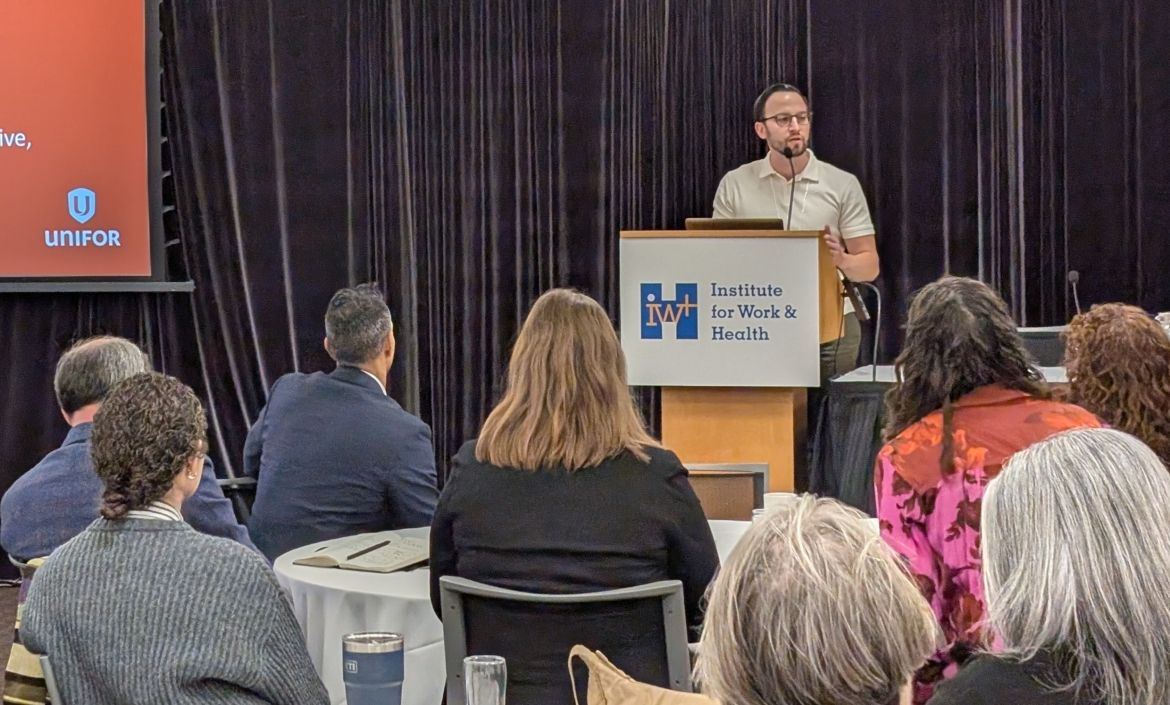
“The main concern our members and labour representatives have with AI at the moment is the lack of regulation on its development,” noted Ryan Rodrigues, national health and safety representative at Unifor. “We see an unprecedented expansion of AI investment and integration without sufficient regulatory oversight, safety protocols, or infrastructure to manage these associated risks.”
“This is a long and uncertain journey,” says Rodrigues. “We hope this project ensures that all stakeholders can be better informed to ensure the adoption of AI in the workplace protects the health, safety rights and agency of workers.”
The PAIQ team is aiming for the evidence they produce to be used by AI developers when developing their systems, by workplaces that are implementing those systems, and by policy-makers that are creating regulations to protect worker health and safety when it comes to AI use in the workplace.
“AI is not a static topic,” said Dr. Arif Jetha, IWH associate scientific director and lead on the project, in his presentation. “It's advancing, and what it looks like today will be quite different than what it looks like in a few years. So, for this project, we want to be responsive to this change and provide evidence that reflects this dynamic and complex topic. And we want to directly translate evidence into the design of tangible strategies for workers and workplaces to mitigate AI’s harms and amplify AI’s benefits.”
To carry out this vison, IWH has recruited 34 partner organizations and almost 40 researchers to collaborate on the project.
“Our partners are critical,” said Jetha. “While IWH has the occupational and public health background, we're bringing together AI and engineering experts, business and industrial relations specialists, policy-makers, researchers, ethicists, and more. This is how we're going to take the evidence we produce, make it usable, and get it out into the field.”
To stay informed about new research and updates from PAIQ, sign up for our monthly newsletter, and bookmark the project page.