





How do Institute for Work & Health (IWH) research findings align with experiences in the field?
That’s one of the questions asked of attendees at the third annual IWH Connects meeting, held this spring.
As a key event on IWH's knowledge transfer and exchange calendar, IWH Connects brings together health and safety leaders who are encouraged to both learn about IWH research and share gaps that they see in their work that would benefit from research.
“Our knowledge transfer and exchange activities involve building relationships, engaging stakeholders in the research process, communicating findings and enhancing stakeholders’ capacity to use research,” said Peter Smith, IWH president and senior scientist, in his opening remarks.
“Events like IWH Connects combine all four of those activities within one day.”
On the agenda were brief remarks from Chief Prevention Officer Joel Moody of the Ministry of Labour, Immigration, Training and Skills Development. Moody shared remarks with attendees about the impacts IWH research has had in advancing injury and illness prevention efforts.
“The research that is done here, it changes lives,” said Moody. “It affects the policy decisions that are made by governments.”
He also highlighted the importance of bringing together different perspectives with events like IWH Connects.
“When there’s collaboration between researchers and system partners, that’s when we’re the strongest,” he said.
This year, attendees heard presentations from three IWH researchers about new and emerging findings, which are summarized below. Topics included occupational health and safety in new businesses, challenges providing workplace disability supports, and substance use and work.
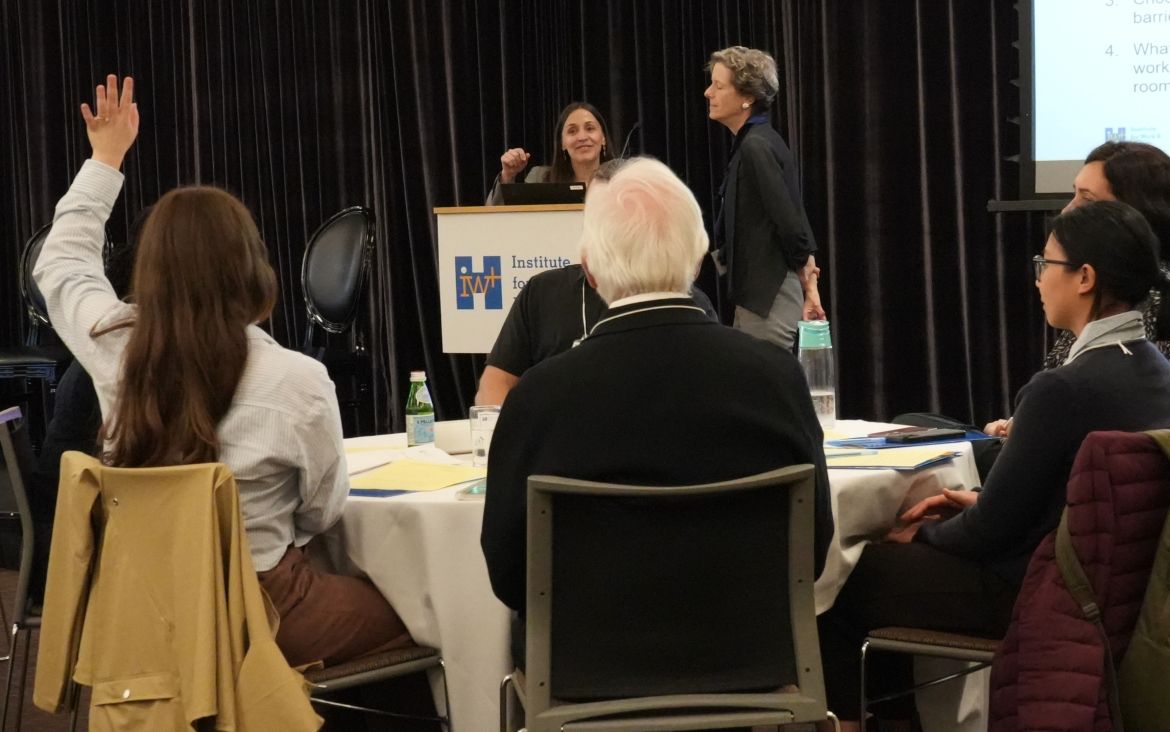
Attendees were given an opportunity to ask questions and make comments that will help guide current and future IWH research.
How new businesses get their start in health and safety
Dr. Lynda Robson, IWH scientist, discussed a project that asked new, small businesses about their occupational health and safety (OHS) practices.
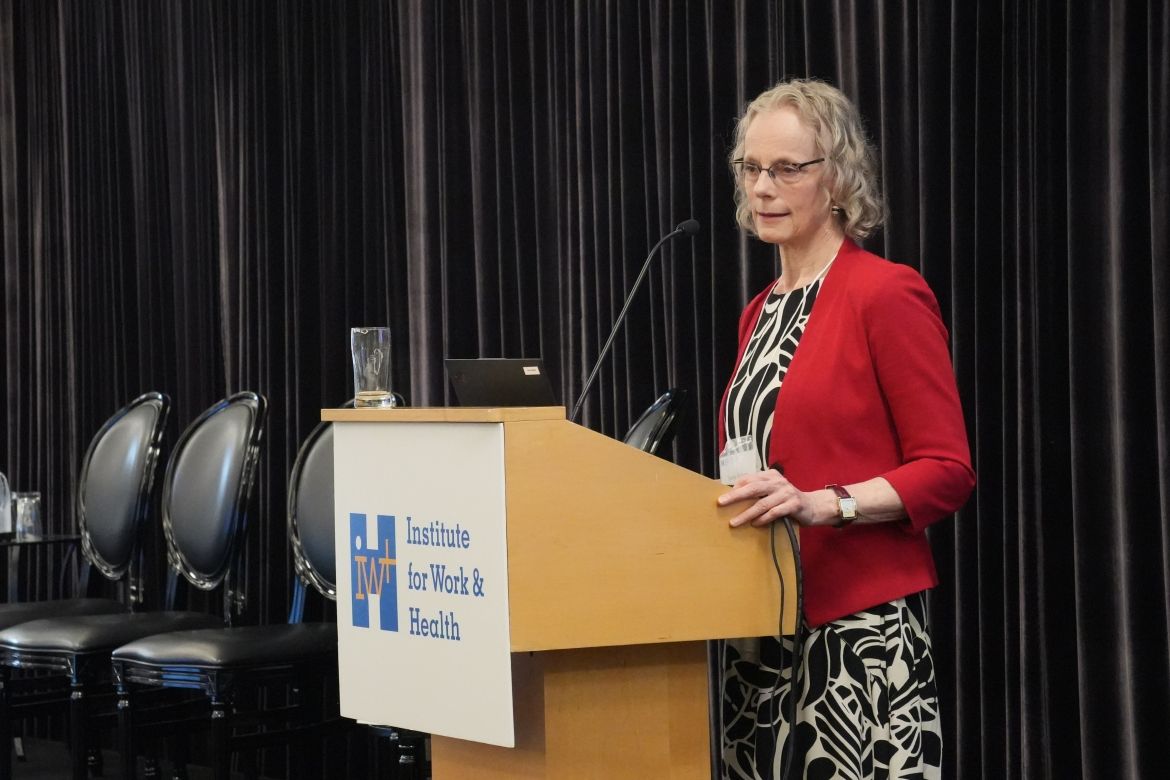
“We're interested in new businesses because we think they would be prone to enhanced risk for their workers,” said Robson, whose team reached out to new businesses identified through the Ontario Business Registry. “That’s because they're small businesses and they’re full of short-tenure employees. Both of those have been associated with an increased risk of injury or illness for their workers.”
She shared survey findings that over a third of owners or managers of new businesses had not started OHS management activities in their first two years—even though many of these businesses had hazards of concern, such as working from heights or with chemicals.
She also discussed diverse factors that are associated with a business’s likelihood of having started OHS management. She found, for example, that owners or managers with more knowledge and confidence about OHS practices were more likely to have taken OHS management steps. To learn more about this study, you can watch Robson’s IWH Speaker Series presentation on the project.
Emerging challenges with workplace disability support provision
Dr. Monique Gignac, IWH scientific director and senior scientist, shared her progress on an ongoing project which asked disability support providers about emerging issues they are seeing in their work.
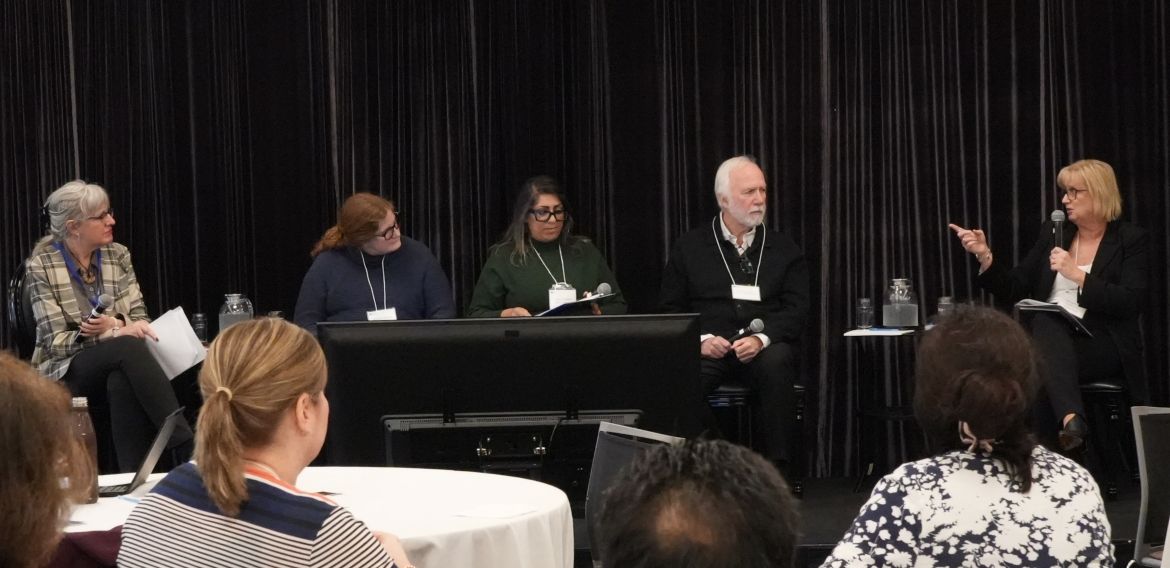
Following her presentation, a panel of IWH Connects members shared challenges from their own workplaces and their experiences providing accommodations and supports to workers. The panel included Elizabeth Chapman of Toyota Manufacturing Canada, Sampada Kukade of Skills for Change, and Mark Lavaway of Mirvish Productions.
“The insights described by both the panel and the audience confirmed our research findings about the growing volume and diversity of accommodation requests in workplaces,” said Gignac. “We heard some great ideas for how to address the challenges raised, which will inform future research in this area.”
What do we know about substance use and work?
Dr. Nancy Carnide, scientist at IWH, provided attendees an overview of the state of research evidence on workers’ use of substances and the impacts on work. She also shared what we know about how work may impact substance use among workers.
“Substance use is often framed as an individual or a clinical issue, but it's also very much an occupational health issue,” said Carnide. “Workers’ use of substances is not rare, and workplace-related use is also not negligible.”
She gave a quick overview of statistics on substance use that have emerged from the past studies, including some of her own. For example, four years after legalization of recreational cannabis, 45 per cent of workers reported using cannabis. Between nine and 14 per cent of workers reported workplace use of alcohol. For illicit drugs, about three per cent of workers surveyed reported workplace use.
Carnide also noted gaps in the current literature that she, and other researchers at IWH, are aiming to fill. She shared several IWH findings about opioids, cannabis and work injuries. For example: injured workers in certain industries, like construction and trades, are at higher risks of opioid harms, and workers who use cannabis at or just before work have twice the risk of injury as those who haven’t used cannabis in the past year.
More cannabis use findings are outlined in an IWH Issue Briefing on the subject. You can also explore more IWH findings related to substance use and work, disability and chronic conditions, OHS management and more on our topic pages. Find more information on IWH Connects here, and IWH’s KTE model here.
To stay informed about when new findings are released for these projects, subscribe to our monthly newsletter.