
Illness/injury prevention
IWH has a long history of conducting research to provide practical guidance to employers, workers, OHS professionals and regulators about what works and what doesn’t in injury or illness prevention. This research targets the injury and illness prevention practices of workplaces, as well as the programs developed by governments, health and safety associations and others to support and motivate workplaces to adopt effective practices.
Featured

IWH Speaker Series
New business owners on why and how OHS starts to matter
Published: October 27, 2026

Research Highlights
Workers with COVID-19 had better return-to-work rates than others during the pandemic
During the pandemic, workers who contracted COVID-19 from work had better return-to-work rates 18 months later than those with other conditions. Most traditional return-to-work factors, however, did not explain the difference in rates.
Published: July 14, 2026

IWH in the media
WAH training standards show 'significant' results: IWH
Findings of a study evaluating the effectiveness of Ontario’s working at heights (WAH) training standards, conducted by a team of researchers at the Institute for Work and Health (IWH), were revealed recently during the Ontario General Contractors Association’s Leadership Day and COR Open House in Mississauga, Ont., Angela Gismondi reports.
Published: Daily Commercial News, March 2019

IWH in the media
Opinion: Avoid shoddy work by using unionized tradespeople for public construction projects
Why do many municipalities, school boards, social housing corporations and other public bodies have long-standing arrangements that see their construction projects built by skilled tradespeople who are members of construction unions? Because the employees are well trained, they work safer and, in the long run, are not a significantly greater cost to the taxpayer than their non-unionized counterparts, writes Phil Gillies in an op-ed that cites Institute for Work & Health research.
Published: Toronto Sun, March 2019
Project report
Project report
Evaluation of the implementation and effectiveness of the Ontario working-at-heights training standard: executive summary
This summary shares the highlights from an Institute for Work & Health evaluation of the implementation and effectiveness of a mandatory working-at-heights training program introduced in Ontario in 2015. Ontario employers were required to ensure that workers on construction projects who worked at heights had successfully completed the training by October 2017.
Published: February 2019
Project report
Project report
Evaluation of the implementation and effectiveness of the Ontario working-at-heights training standard: final report
The Institute for Work & Health shares the findings from its evaluation of the implementation and effectiveness of a mandatory working-at-heights training program introduced in Ontario in 2015. Ontario employers were required to ensure that workers on construction projects who worked at heights had successfully completed the training by October 2017.
Published: February 2019
IWH Speaker Series
IWH Speaker Series
Evaluating the implementation and effectiveness of Ontario’s working-at-heights training standards
In 2015, Ontario's Ministry of Labour implemented regulations defining working-at-heights (WAH) training program standards and establishing a program for approving training providers in the province. In this presentation, Dr. Lynda Robson shares findings from a study that examined the reach and effectiveness of the training standard.
Published: February 2019

At Work article
Supportive supervisors help reduce risks when workers face hazards, lack protection
Workers are vulnerable to injuries or illnesses when they're exposed to hazards and lacking protective factors such as OHS policies, awareness or empowerment. However, supportive supervisors can help lower the likelihood of injuries even when workers are vulnerable, according to a new study.
Published: February 2019

IWH in the media
Despite ban, asbestos lingers and takes a toll decades later
Because decades might pass before a person exposed to asbestos develops mesothelioma, asbestosis or the other related diseases, health professionals believe the number and costs of asbestos-related cancers and disease will continue to rise, writes Monique Keiran in a column that cites Institute research.
Published: Times Colonist, January 2019
IWH in the media
Research looks at cost-effectiveness in silica dust exposure fight
Personal protective equipment (PPE) is not always the most cost-effective means of protecting workers from dangers associated with exposure to silica dust, writes Don Proctor, reporting on the findings of an IWH study.
Published: Daily Commercial News, January 2019

IWH in the media
Women four times more likely to experience sexual assault at work
Violence-related injuries at work are on the rise across Canada and this is especially the case for women, according to two recent studies conducted at the not-for-profit Institute for Work and Health, writes IWH Senior Scientist Dr. Peter Smith.
Published: The Conversation, January 2019
Impact case study
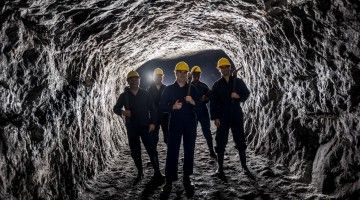
Ontario Mining Association endorses safety climate and assessment audit tool
A tool designed to measure "two sides of the coin"—OHS systems and culture—developed by Workplace Safety North with IWH expertise, has been endorsed by Ontario's mining association, and now is in demand well beyond the province and the sector.
Published: January 2019