
Construction sector
IWH research that specifically involves construction workplaces, workers, unions, employers and/or associations, as well as research on programs that specifically target the construction sector, is collected together here. Not included is IWH research that cuts across all or many sectors, even though it may be relevant to the construction sector. For this reason, visitors are encouraged to explore beyond this page to find equally important information on the prevention of work injury and disability in construction.
Featured

Research Highlights
In which occupations are Ontario workers who had a work-related injury most at risk of opioid-related harms?
Formerly injured workers in certain occupations in Ontario are at an elevated risk of experiencing opioid-related harms, according to a study by IWH and the Occupational Cancer Research Centre.
Published: October 17, 2024
Impact case study
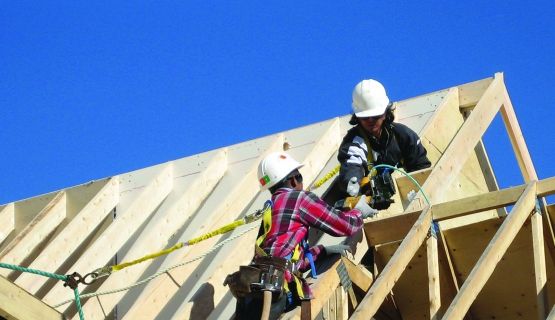
IWH evaluation of the effectiveness of the Ontario working-at-heights training standard
An IWH study on the effectiveness of Ontario's mandatory training was valuable to the labour ministry in several ways—including in reinforcing the value of program evaluations.
Published: November 21, 2023
Project
Project
Addressing suicide and substance use in construction: A Canadian industry-research partnership
This project establishes a national partnership among researchers, industry stakeholders, and mental health experts to co-produce evidence needed to inform and prioritize actionable strategies to reduce the burden of suicide and substance use in the construction workforce.
Status: Ongoing

IWH in the media
Construction sector faces 'crisis' as poor mental health, suicide, substance use harms grow
Compared to the overall labour force in Ontario and Alberta, construction workers are almost twice as likely to die because of suicide and are two and a half times as likely to die because of substance use. Those are some of the early findings from a new analysis by the Institute for Work and Health, which identifies what some are calling a crisis among construction workers, writes Lindsay Kelly.
Published: Northern Ontario Business, May 2026
Journal article
Journal article
Heat exposure and health outcomes in construction workers: a systematic review and meta-analysis
Published: Environmental Health Insights, March 2026
Project
Project
Construction union effect
Two studies have previously examined the union effect on workplace injuries in the industrial, commercial and institutional (ICI) sector of construction, using only data from Ontario's Workplace Safety and Insurance Board (WSIB). This study both repeats and extends these studies earlier methods, by using additional sources of data.
Status: Ongoing
IWH in the media
IWH in the media
In Ontario's housing crisis, immigrants are the scapegoat and the solution
The feds say reducing immigration will alleviate housing demand, but with a chronic worker shortage, the construction sector has increasingly relied on immigrant labour to build new homes, writes Inori Roy, drawing on data compiled for The Local by IWH.
Published: The Local, January 2025
IWH in the media
IWH in the media
Calling for mental health awareness in construction
May is Mental Health Awareness Month in Canada. With this awareness initiative comes the opportunity to hone the construction industry's commitment to addressing the mental health challenges that continue to put workers' lives and livelihoods at risk. Matthew Bradford reports on the challenges related to addressing mental health in the sector, with comments from Dr. Peter Smith, IWH president and senior scientist.
Published: Builders Digest, October 2024

IWH in the media
SCSA uses survey tool to help companies prevent incidents before they happen
An innovative new survey tool is being used by the Saskatchewan Construction Safety Association (SCSA) to help companies identify hazards and prompt them to take steps to reduce injury risks, reports Grant Cameron. The tool was developed by the SCSA in collaboration with EHS Analytics, a Calgary-based company that specializes in health and safety data, research and machine learning. The survey is an eight-item questionnaire developed by the Institute for Work & Health (IWH) and Ontario’s prevention systems partners to assess values and beliefs around a company’s workplace culture. Data collected can be used to help identify where improvements need to be made.
Published: Journal of Commerce, October 2024

Research Highlights
In which occupations are Ontario workers who had a work-related injury most at risk of opioid-related harms?
Formerly injured workers in certain occupations are at an elevated risk of experiencing opioid-related harms, according to a study by IWH and the Occupational Cancer Research Centre. Looking within a large sample of formerly injured Ontario workers, occupational groups with greater risks of harms included construction, forestry and logging, materials handling, and processing.
Published: October 2024

IWH in the media
Survey tool effective in predicting injuries and improving safety
A safety culture survey tool is making significant strides in improving workplace safety across the Saskatchewan construction industry. Developed by the Saskatchewan Construction Safety Association (SCSA) in collaboration with EHS Analytics, this survey tool is proving to be an invaluable asset in predicting workplace injuries and enhancing Occupational Health and Safety (OHS) performance, writes Shane Mercer, describing the use of IWH's Organizational Performance Metric (IWH-OPM).
Published: Canadian Occupational Safety, August 2024

Research Highlights
Workers who had a work-related injury have higher risk of opioid-related harms than the general population in Ontario
An IWH study examined how opioid harms in a large group of Ontario workers who had a work-related injury compared to harms in the general Ontario population. They found that the workers had higher risks of emergency department visits and hospitalizations for opioid-related harms. This pattern was seen across most occupations and industries within this group of workers.
Published: April 2024