
Construction sector
IWH research that specifically involves construction workplaces, workers, unions, employers and/or associations, as well as research on programs that specifically target the construction sector, is collected together here. Not included is IWH research that cuts across all or many sectors, even though it may be relevant to the construction sector. For this reason, visitors are encouraged to explore beyond this page to find equally important information on the prevention of work injury and disability in construction.
Featured

Research Highlights
In which occupations are Ontario workers who had a work-related injury most at risk of opioid-related harms?
Formerly injured workers in certain occupations in Ontario are at an elevated risk of experiencing opioid-related harms, according to a study by IWH and the Occupational Cancer Research Centre.
Published: October 17, 2024
Impact case study
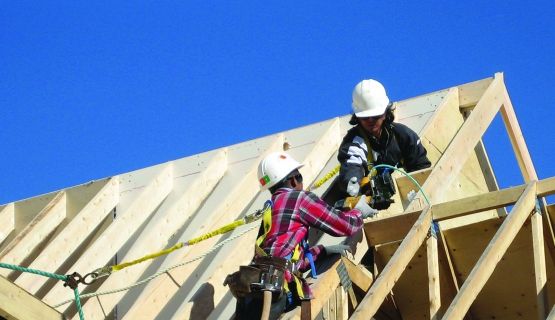
IWH evaluation of the effectiveness of the Ontario working-at-heights training standard
An IWH study on the effectiveness of Ontario's mandatory training was valuable to the labour ministry in several ways—including in reinforcing the value of program evaluations.
Published: November 21, 2023
Journal article
Journal article
Preventing fall-from-height injuries in construction: effectiveness of a regulatory training standard
Published: Journal of Safety Research, September 2020

At Work article
Comparing the costs, benefits of silica dust prevention methods for construction workers
Construction workplaces can use different methods to reduce exposure to silica dust and protect workers from cancer down the road. But which methods should they opt for? A cost-benefit analysis led by IWH offers some guidance.
Published: August 2020
Journal article
Journal article
A probabilistic approach for economic evaluation of occupational health and safety interventions: a case study of silica exposure reduction interventions in the construction sector
Published: BMC Public Health, February 2020
Journal article
Journal article
Utilizing construction safety leading and lagging indicators to measure project safety performance: a case study
Published: Safety Science, December 2019

At Work article
Employers certified by COR programs have greater reduction in injury rates: studies
Although COR programs are offered in most provinces and territories across the country, little research has been done on their effectiveness. A research program recently examined workers' compensation data in B.C. and Alberta for links between certification and injury rates.
Published: November 2019
IWH Speaker Series
IWH Speaker Series
The effectiveness of COR in preventing work injury: lessons from Alberta and B.C.
Certificate of Recognition (COR) programs are voluntary audits that recognize employers for having strong occupational health and safety (OHS) practices. In this presentation, IWH Scientist Dr. Chris McLeod shares his research in British Columbia and Alberta on the effectiveness of COR programs in preventing work-related injury.
Published: November 2019

IWH in the media
Guest column: T.O. council's decision on construction tendering makes sense
On June 19th , Toronto City Council voted overwhelmingly to maintain its contractual relationship with the province’s major construction union. It's a longstanding relationship that militates towards high quality work, safer job sites and a robust training sector, writes guest columnist Phil Gillies, who points to IWH research on the union safety effect to support one of his arguments.
Published: Toronto Sun, July 2019

At Work article
Ontario’s working-at-heights training led to safer practices, reduced injury claims rates
Ontario's mandatory training standard for construction workers at risk of falls from heights was effective in reducing claims rates—especially among small employers and high-risk subsectors—an IWH evaluation study found.
Published: April 2019
IWH in the media
Regulated working at heights training works and needed: studies
Two recently released Ontario studies demonstrate why mandatory, standardized working at heights training is so critical to worker well-being. One study undertaken by the Institute for Work & Health (IWH) conducted an evaluation of the impact the province’s working at heights training standard had on workers and their work sites. A second and earlier probe prepared by the Ministry of Labour (MOL) for the Chief Prevention Officer undertook root cause analysis of worker deaths from falls from heights.
Published: Workers Health & Safety Centre, April 2019

IWH in the media
WAH training standards show 'significant' results: IWH
Findings of a study evaluating the effectiveness of Ontario’s working at heights (WAH) training standards, conducted by a team of researchers at the Institute for Work and Health (IWH), were revealed recently during the Ontario General Contractors Association’s Leadership Day and COR Open House in Mississauga, Ont., Angela Gismondi reports.
Published: Daily Commercial News, March 2019