
Construction sector
IWH research that specifically involves construction workplaces, workers, unions, employers and/or associations, as well as research on programs that specifically target the construction sector, is collected together here. Not included is IWH research that cuts across all or many sectors, even though it may be relevant to the construction sector. For this reason, visitors are encouraged to explore beyond this page to find equally important information on the prevention of work injury and disability in construction.
Featured

Research Highlights
In which occupations are Ontario workers who had a work-related injury most at risk of opioid-related harms?
Formerly injured workers in certain occupations in Ontario are at an elevated risk of experiencing opioid-related harms, according to a study by IWH and the Occupational Cancer Research Centre.
Published: October 17, 2024
Impact case study
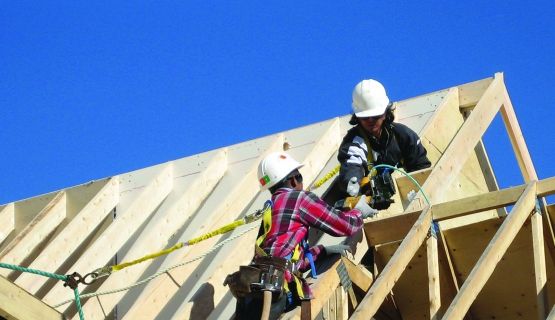
IWH evaluation of the effectiveness of the Ontario working-at-heights training standard
An IWH study on the effectiveness of Ontario's mandatory training was valuable to the labour ministry in several ways—including in reinforcing the value of program evaluations.
Published: November 21, 2023

IWH in the media
Opinion: Avoid shoddy work by using unionized tradespeople for public construction projects
Why do many municipalities, school boards, social housing corporations and other public bodies have long-standing arrangements that see their construction projects built by skilled tradespeople who are members of construction unions? Because the employees are well trained, they work safer and, in the long run, are not a significantly greater cost to the taxpayer than their non-unionized counterparts, writes Phil Gillies in an op-ed that cites Institute for Work & Health research.
Published: Toronto Sun, March 2019
Project report
Project report
Evaluation of the implementation and effectiveness of the Ontario working-at-heights training standard: final report
The Institute for Work & Health shares the findings from its evaluation of the implementation and effectiveness of a mandatory working-at-heights training program introduced in Ontario in 2015. Ontario employers were required to ensure that workers on construction projects who worked at heights had successfully completed the training by October 2017.
Published: February 2019
Project report
Project report
Evaluation of the implementation and effectiveness of the Ontario working-at-heights training standard: executive summary
This summary shares the highlights from an Institute for Work & Health evaluation of the implementation and effectiveness of a mandatory working-at-heights training program introduced in Ontario in 2015. Ontario employers were required to ensure that workers on construction projects who worked at heights had successfully completed the training by October 2017.
Published: February 2019
IWH Speaker Series
IWH Speaker Series
Evaluating the implementation and effectiveness of Ontario’s working-at-heights training standards
In 2015, Ontario's Ministry of Labour implemented regulations defining working-at-heights (WAH) training program standards and establishing a program for approving training providers in the province. In this presentation, Dr. Lynda Robson shares findings from a study that examined the reach and effectiveness of the training standard.
Published: February 2019

IWH in the media
Research looks at cost-effectiveness in silica dust exposure fight
Personal protective equipment (PPE) is not always the most cost-effective means of protecting workers from dangers associated with exposure to silica dust, writes Don Proctor, reporting on the findings of an IWH study.
Published: Daily Commercial News, January 2019
Project
Project
Occupational health and safety performance in Ontario's unionized construction sector
A previous Institute study found that, during the period 2006-2012, unionized contractors in Ontario's industrial, commercial and institutional sector had higher no-lost-time claim rates and lower lost-time claim rates than their non-unionized counterparts, suggesting unionized contractors may do better at encouraging injury reporting and reducing injury risk. A new IWH study is replicating the methods of this previous study for the time period 2012-2017.
Status: Completed 2020
IWH in the media
Research on silica exposure controls finds PPE comes at a cost
Research estimating cancers averted and intervention costs of two silica control measures offers an important new perspective on the control of occupational cancers. Among the compelling findings, researchers concluded that personal protective equipment (PPE) is not the most cost-effective method of protecting workers from silica exposures, calling into question the common practice of providing PPE to workers exposed to hazardous materials.
Published: Workers Health & Safety Centre, December 2018
IWH Speaker Series
IWH Speaker Series
An impact analysis of two silica dust exposure reduction strategies
Crystalline silica dust exposure is common in the construction sector. Inhalation of silica dust is known to cause lung cancer, silicosis, chronic obstructive pulmonary diseases, rheumatoid arthritis and tuberculosis. In this presentation, Dr. Emile Tompa examines the implementation of two approaches to reducing exposure: use of personal protective equipment (i.e. respirators) by all exposed individuals and use of engineering controls (e.g. wet method) wherever and whenever feasible. He shares findings from an impact analysis based on data spanning 30 years.
Published: November 2018
At Work article
Embedding essential skills training in OHS lessons can boost learning: study
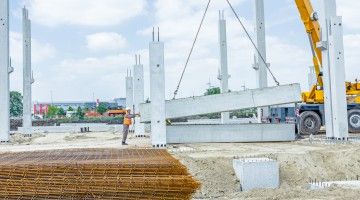
The work of rigging and hoisting loads comes with significant hazard. Adding to the injury prevention challenge is the fact that many people doing this work have literacy and numeracy skills gaps. A recent IWH study tried out a novel approach to address these learning needs.
Published: April 2018

Tools and guides
Essential Skills and OHS Training
This guide, based on a research collaboration led by the Institute for Work & Health, provides an overview of the process involved in modifying the curriculum of an existing occupational health and safety (OHS) training program in order to address gaps in essential skills among worker trainees.
Published: April 2018