
Construction sector
IWH research that specifically involves construction workplaces, workers, unions, employers and/or associations, as well as research on programs that specifically target the construction sector, is collected together here. Not included is IWH research that cuts across all or many sectors, even though it may be relevant to the construction sector. For this reason, visitors are encouraged to explore beyond this page to find equally important information on the prevention of work injury and disability in construction.
Featured

Research Highlights
In which occupations are Ontario workers who had a work-related injury most at risk of opioid-related harms?
Formerly injured workers in certain occupations in Ontario are at an elevated risk of experiencing opioid-related harms, according to a study by IWH and the Occupational Cancer Research Centre.
Published: October 17, 2024
Impact case study
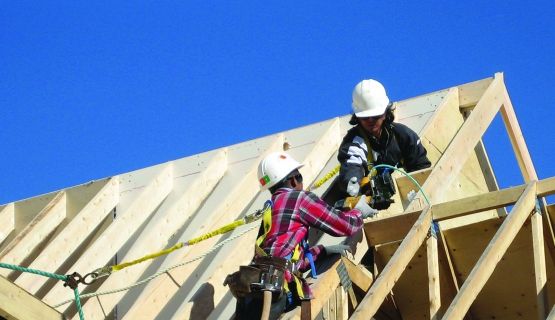
IWH evaluation of the effectiveness of the Ontario working-at-heights training standard
An IWH study on the effectiveness of Ontario's mandatory training was valuable to the labour ministry in several ways—including in reinforcing the value of program evaluations.
Published: November 21, 2023

At Work article
Eight safety leading indicators for the construction worksite
What do flex and stretch programs at construction worksites have to do with safety climate and safety culture? A PREMUS keynote speaker thinks she has the answer.
Published: August 2016
Project report
Project report
Economic burden of lung cancer and mesothelioma in Canada due to occupational asbestos exposure (2016)
This June 2016 presentation provides an early look at the results of an economic burden study on the costs to Canadian society of new cases of lung cancers and mesothelioma attributable to occupational asbestos exposures in a particular year.
Published: June 2016
Video
Video
The effect of COR certification on injury rates
We looked at the injury rates of firms that received COR Certification for occupational health and safety.
Published: June 2016

IWH in the media
Unionized construction workers in Ontario less likely to be injured, less lost time than non-construction workers, says new study
Sean Strickland, of the Ontario Construction Secretariat, which funded the Institute for Work & Health (IWH) study, says it confirms there is a ‘union safety effect’ on workplaces.
Published: The Hill Times, January 2016

IWH in the media
Are union workers safer?
An Institute for Work & Health (IWH) study states construction firms that employ union workers have fewer work injuries that require workers’ compensation payments for time away from work.
Published: Roofing, January 2016
Project
Project
Determinants of health and safety in unionized and non-unionized firms in Ontario’s construction sector
According to previous findings from IWH, unionized construction firms have fewer lost-time, critical and musculoskeletal workers’ compensation claims than non-unionized ones. Do differing workplace policies and practices in unionized firms account for this. An IWH team sought to answer the question.
Status: Completed 2017

At Work article
IWH study in construction sector suggests unionized firms are safer
First industry-wide study in Ontario by Institute for Work & Health finds unionized construction workers report more claims overall but fewer claims that result in time off work.
Published: November 2015
Project report
Project report
Economic burden of lung cancer and mesothelioma in Canada due to occupational asbestos exposure (2015)
This November 2015 presentation provides an early look at the results of an economic burden study on the costs to Canadian society of new cases of lung cancers and mesothelioma attributable to occupational asbestos exposures in a particular year.
Published: November 2015

IWH in the media
Hand in hand
The debate on the role of unions in influencing workplace safety is as old as unions are. Organized labour, by serving as employee advocates, may have a positive influence on job safety after all, according to a recent Institute for Work & Health (IWH) study.
Published: OHS Canada, November 2015

IWH in the media
Unionized firms are safer, concludes OCS-funded study
A new study analyzing injury claims data for 5,800 unionized firms and 39,000 non-unionized firms suggests unionized construction firms in Ontario are safer than non-union firms.
Published: Daily Commmercial News, September 2015